
THE UNIVERSAL MAROON COUNCIL OF ELDERS
One Ancestry • Many Nations • A United Maroon Future
The Universal Maroon Council of Elders is an international body of traditional leaders, cultural custodians and authorized representatives dedicated to the unity, advancement and protection of Maroon Nations and communities worldwide.
Founded on freedom, self-determination, ancestral responsibility and mutual respect, the Council provides a forum for cooperation while preserving each Nation’s identity, customs, laws, leadership and territorial authority.
The Council unites Maroon peoples around their shared heritage, common interests and collective aspirations without replacing the lawful leadership of any Nation.
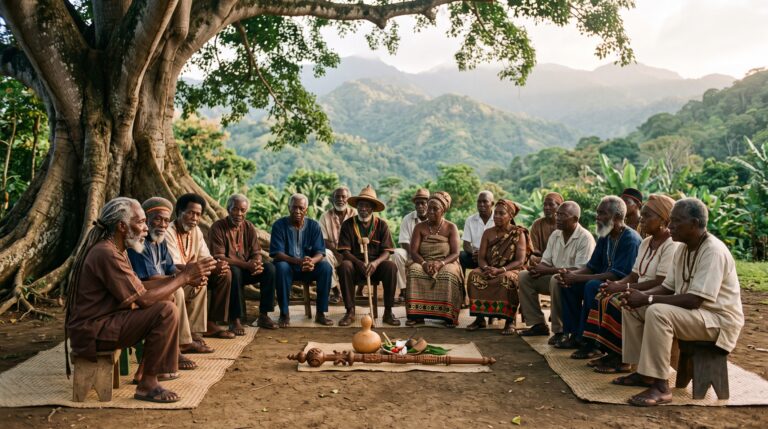
A Universal Institution of Maroon Unity
The Council provides a platform for Maroon Nations to deliberate, cooperate and speak collectively on global matters affecting Maroon peoples.
Its strength lies in unity without uniformity. Each participating Nation retains its sovereignty, cultural identity and governing system while contributing to a wider alliance.
Its values include:
- Ancestral honor and cultural preservation
- Freedom and self-determination
- Justice, dignity and human rights
- National and territorial integrity
- Peaceful cooperation
- Accountable leadership
- Economic independence
- Protection of future generations
Composition of the Council
The Council may include:
- Chief
- Deputy Chief
- President
- Vice President
- Secretary
- Treasurer
- Public Relations and Communications Officer
- Advisory Council of Traditional Elders
- Representatives of participating Maroon Nations
- Specialized councils and committees
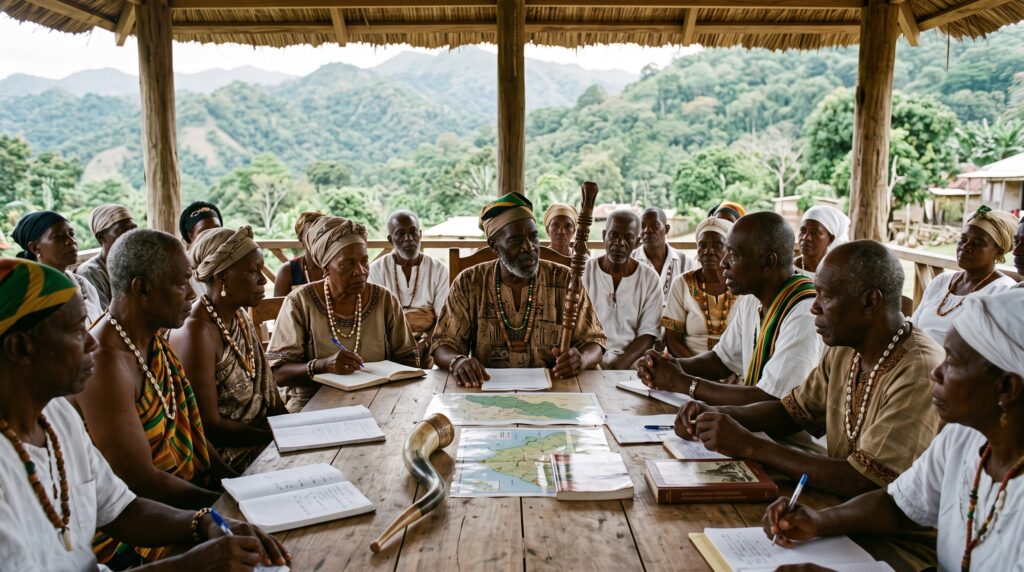
Regional branches may represent Maroon communities throughout the Caribbean, the Americas, Africa, Europe and the Global Maroon Diaspora.
Each Nation may appoint an Elder, traditional leader or authorized representative according to its customs and governing procedures.
Respect for Sovereignty
The Council respects the dignity, authority and self-determination of every participating Maroon Nation.
No Nation must surrender its identity, customs, lands, leadership or internal authority to participate. The Council shall not interfere in domestic affairs unless assistance or mediation is formally requested or authorized.
The Council may act internationally only with the consent or mandate of the Nations concerned. It may also provide dialogue, reconciliation and mediation when disputes arise.
Collective Representation
When authorized, the Council may represent participating Maroon Nations before governments, international institutions, Indigenous organizations, universities, businesses and humanitarian bodies.
Its advocacy may address:
- Maroon history, identity and institutions
- Indigenous and sovereign rights
- Ancestral lands and sacred territories
- Treaties, customs and traditional law
- Cultural preservation and restoration
- Reparatory justice
- International cooperation
- Environmental protection
- Economic development
- Education, health and community advancement
- Security and emergency assistance
- Protection of future generations
Guardianship of Heritage
The Council protects Maroon history and living heritage, including oral traditions, languages, ceremonies, spiritual practices, sacred places, music, dance, traditional knowledge and historical records.
It may establish archives, cultural institutions, educational programs, museums, research centers and digital repositories to preserve and teach Maroon history through Maroon voices.
Economic Cooperation
The Council recognizes that cultural survival requires economic strength. It may encourage cooperation in:
- Agriculture and food security
- Tourism and cultural enterprise
- Trade, banking and investment
- Education and professional development
- Technology and digital infrastructure
- Renewable energy
- Housing and infrastructure
- Indigenous business development
- Youth employment
- Health care and traditional medicine
- Responsible use of natural resources